|
|
|
Columnarios
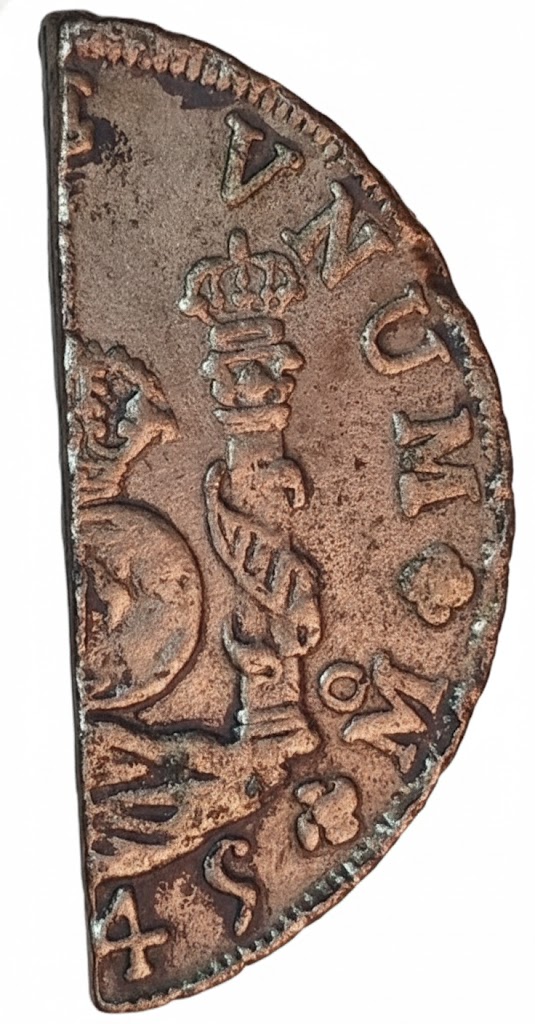
What are columnarios? The distinctive design features on the obverse two pillars, each with a crown and wrapped with a banner bearing the words PLUS VLTR. Between the two pillars are two worlds sitting on an ocean of water. The reverse features a heraldic shield capped with a crown. These silver crowns have a machined or milled edge and weight 27g. Columnarios circulated throughout the New World including the United States where it was accepted as legal tender until 1857. Fractional columnarios include 4 reales, 2 reales, 1 and 1/2 real. Although sometimes referred to as Spanish Milled Dollars, Pillar Dollars, or Pieces of Eight, the technically correct term is columnarios, plural -- or, columnario, singular. Columnarios are the iconic Spanish silver 8 reales coins produced across the New World’s most prominent mints—including Mexico City, Lima, and Potosí—between 1732 and 1772. These coins represented a significant advancement in numismatic history, as they featured a machined or "milled" edge and a consistent weight of 27g, making them far more reliable for trade than earlier, hand-struck coinage. While they are famously known by nicknames like "Pillar Dollars," "Spanish Milled Dollars," or "Pieces of Eight," the technically correct term is columnario in the singular or columnarios in the plural. The coin's distinctive aesthetic is defined by its sophisticated neoclassical imagery. On the obverse, two crowned pillars—the Pillars of Hercules—are wrapped in banners bearing the motto PLUS ULTRA ("Further Beyond"), flanking two globes that represent the Old and New Worlds resting upon the sea. The reverse side features a majestic heraldic shield capped with the Spanish royal crown. This design was so respected for its silver purity and craftsmanship that the coins became a global standard for commerce, circulating as legal tender in the United States until the Coinage Act of 1857. In addition to the standard 8 reales "crown," these coins were minted in fractional denominations of 4, 2, 1, and 1/2 real to facilitate smaller transactions. Because of their international reach and the practice of physically cutting the larger coins into segments to make change, the columnario became the cornerstone of the colonial economy. Their legacy persists today as one of the most recognizable and historically significant silver coins ever minted, bridging the gap between the Spanish Empire's wealth and the burgeoning financial system of the early Americas. Columnarios were minted in the New World such mints as Mexico City, Guatemala, Santa Fe de Bogotá, Popayán, Lima, Potosí, and Santiago. Below are some of the key features of the columnario: Mint Mark The most common series is that of Mexico. The mint mark is a large "M" with a small "o" over it. This was used during the entire series from 1732 to 1772 and appears twice on the 8 reales columnario, on each side of the date on the obverse. Note that in 1733 an experimental "M-X" mint mark was used for that year only. Other mint marks include: "G" for Guatemala; "N" with "o" over it on left of date and "R" with "o" over it on right of date for Nuevo Reino; "PN" for Popayán, minted only one year in 1769; "LM" for Lima; Potosí used a special character made of a "P", "T", and "S"; an "S" with an "o" over it for Santiago. For dates of these series, see the catalog. Assayer's
Initials On the reverse of the columnario and to the left of the heraldic shield you will find the assay mark. This typically consists of one or two initials. On the Mexico series "MF" and "MM" are common. "J" is common on Santiago columnarios. And "JM" is common on columnarios minted in Lima. For a complete list of assay marks, refer to the catalog. The letters most often refer the the first letter of the name of the assayer or, if there are two assayers, then the first name of each. For example, with the later-date Mexico columnarios from 1762 to 1770 the "MF" (as shown above) is for Manuel Assorín and Francisco Antonio de la Peña y Flores. Date The date on the columnario is found on the obverse at the bottom between two rosettes with the mint marks on the other sides of the rosettes. Different styles of numbers were used and is a key identifier. Early date Mexico, Guatemala, and Lima columnarios, for instance, used an Arabic "5" while later-date examples feature standard "5"s. Also, various styles can be found with the numbers "6" and "9". Denomination Located on the right side of the heraldic shield on the reverse is an 8 with rosettes above and below. This indicates 8 reales. Fractional columnarios include: 4 reales with a "4"; 2 reales with a "2"; 1 real with "1"; half real which was not marked with a denomination due to space limitations. Half of a Piece of
Eight [click
to enlarge] The 8 reales columnario is the forerunner of the US Dollar. Therefore, the 4 reales columnario is equivalent to a "half dollar"; the 2 reales a "quarter"; and the 1 real is one "bit".
|